
UNIMA Joins Global Partners to Develop AI-Powered Emergency Reporting Platform
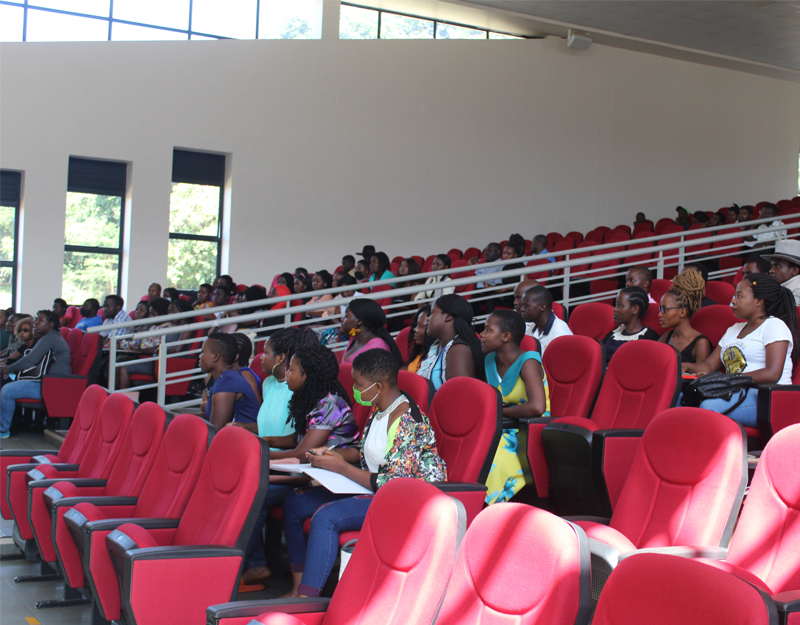
The Malawi Voice Data Commons (MVDC) hosted a workshop to co-create appropriate specifications for an innovative Artificial Intelligence (AI)-powered digital platform to enhance emergency reporting in Malawi at the University of Malawi (UNIMA) on 29th June 2026.
The workshop, which was facilitated by the Inclusive Digital Transformation for Malawi (IDT4M) Project, brought together traditional leaders, representatives from political parties, civil society organisations, faith-based groups, academics, language experts, government institutions, students, advocacy groups, and organisations of persons with disabilities from Zomba.
During the workshop, participants identified, categorised, and prioritised various types of emergencies to be incorporated into the system whose aim is to enable emergency reporting in Chichewa.
Once operational, the platform will be accessible via toll-free numbers, allowing the public to report incidents through audio messages at no cost, using their local language.
The spoken Chichewa data will be processed and translated into English using AI, enabling emergency responders and relevant authorities to rapidly comprehend reported information and coordinate appropriate interventions.
The reporting system is expected to address a broad spectrum of emergencies, including gender-based violence (GBV), physical violence, sexual harassment, land disputes, corruption, natural disasters, and incidents affecting vulnerable groups such as children, older persons, and persons with disabilities.
Speaking at the co-creation workshop, MVDC Project Leader from New York University, Marine Colline Ragnet, noted that one of the project’s primary challenges is the limited capacity of existing AI technologies to accurately understand and process Chichewa and other Malawian languages.
“Before AI can effectively translate emergency reports into English, it must first be trained on local language data to recognise Chichewa words and phrases commonly associated with emergencies and conflict situations. This training will enable the system to better identify the nature of reported incidents and facilitate faster, more accurate responses from authorities,” she emphasised.
In addition to brainstorming the various forms of violence and emergencies experienced by communities, discussions addressed reporting protocols, appropriate recipient institutions, and mechanisms for coordinating timely and effective multi-agency responses.
Coordinator of the IDT4M Project at UNIMA, Dr. Chipo Kanjo, who is an Associate Professor in the Department of Computing,, highlighted that the collaboration between UNIMA and UNDP through the IDT4M Project has enabled the Department to work closely with the MVDC Programme, a key UNDP partner.
“Through this partnership, UNIMA students will contribute to collecting voice recordings and linguistic data in Chichewa, which will be used to build a comprehensive language repository for AI systems. This repository will enhance the capacity of AI technologies to recognise, understand, and process Chichewa, thereby strengthening the effectiveness of digital solutions developed for Malawi and other local language contexts.
Through its Department of Computing, UNIMA is an active member of the UNDP Public Universities Consortium - which also includes Malawi University of Business and Applied Sciences (MUBAS), Malawi University of Science and Technology (MUST), Mzuzu University (MZUNI), and Lilongwe University of Agriculture and Natural Resources (LUANAR) - under the Inclusive Digital Transformation for Malawi (IDT4M) Project.
As part of this initiative, UNIMA, MUBAS and MUST have joined the MVDC Programme, a partnership between UNDP and New York University aimed at developing an innovative Artificial Intelligence (AI)-powered digital platform to enhance emergency reporting in Malawi, in collaboration with the Malawi Peace and Unity Programme.
The MVDC initiative began with training sessions for university students serving as Digital Advocates, focusing on the collection of Chichewa voice data and the involvement of the Department of Computing is channelled through the IDT4M Project.