

UNIMA Leads AI Model Development for Agrometeorological Advisory System
The University of Malawi (UNIMA), through the Centre for Resilient Agri-food Systems (CRAFS), is taking a leading role in the development and validation of an artificial intelligence (AI)-enabled agrometeorological advisory system being developed under the Agricultural Resilience through Climate Services (ARCS) initiative.
The AI-enabled advisory system is being developed through a multidisciplinary collaboration involving UNIMA, the Malawi University of Science and Technology (MUST), Lilongwe University of Agriculture and Natural Resources (LUANAR), the Centre for Environmental Policy and Advocacy (CEPA), the Department of Climate Change and Meteorological Services (DCCMS), the Ministry of Agriculture, Irrigation and Water Development, and Malawi’s e-government structures.
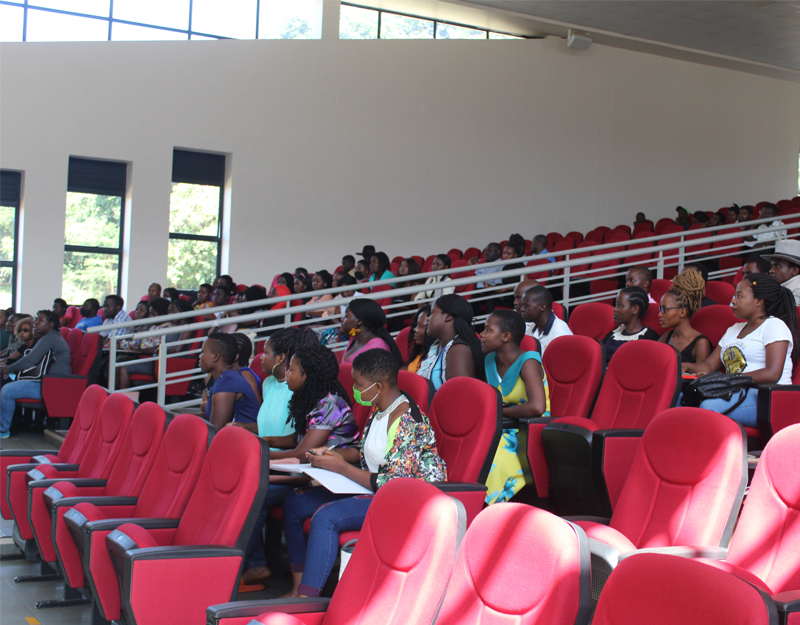
The system underwent expert review at a meeting held in Liwonde on 15 September 2026, marking an important scientific and technical checkpoint before proceeding to controlled field pretesting with farmers and extension workers in Machinga District.
The review brought together specialists from government, academia, development organisations and agricultural institutions to examine the current model, the scientific and technical basis of the advisories it generates, and areas requiring further refinement before and during field testing. The invited experts included representatives from the National Planning Commission (NPC), United Nations Development Programme (UNDP), Food and Agriculture Organization of the United Nations (FAO), CGIAR and Total LandCare, among other national and international stakeholders.
The team is working to combine weather and climate information with agricultural knowledge and advisory guidance to provide location-specific and actionable information to farmers and extension personnel.
Under the collaboration, UNIMA is leading the model-development process, with particular responsibility for strengthening the scientific foundations of the system, integrating climate-data evidence with agricultural knowledge, developing advisory-generation logic, and validating the model.
The model-development and validation work is being led by Dr Dackson Masiyano from the Department of Physics and Electronics at UNIMA.
Masiyano says the review was intended to assess the entire process through which information is transformed into farmer-facing adviceand that the approach was important in ensuring that the system meets the required scientific and practical standards before wider use.
“The purpose of this exercise is not simply to test whether the application works technically. We are testing whether the information entering the system is scientifically sound, whether the agricultural advice is appropriate, whether the meaning is preserved when it reaches the farmer, and whether the farmer can use that information to support a real decision,” he said.
The review also highlighted the importance of accessibility and sustainability in the development of digital agricultural solutions.
Dr Andrew Jamali, Acting Director of Knowledge and Learning at NPC, commended the initiative, saying it has the potential to strengthen access to timely agricultural information.
He, however, stressed the need to ensure that the system does not exclude farmers with limited access to smartphones or mobile data.
“I encourage the team to explore approaches that could make the service accessible through basic phones and assisted extension pathways, while also considering long-term sustainability and private-sector participation,” said Jamali
Following the Liwonde expert review meeting, the model-development team proceeded to controlled farmer-facing pretesting in Nsanama and Nanyumbu Extension Planning Areas (EPAs) in Machinga District.
The field-testing process is designed to assess not only whether the technology functions, but also whether the resulting advisories can be accessed, understood and applied within real farming contexts.
The testing includes both direct farmer interaction with the system and pathways through which information can be delivered through extension workers or lead farmers.
Phillip Tegha, Country Director for Malawi and Moçambique at Development Fund, said the ARCS approach was centred on bringing together scientific knowledge, technology, and the experiences of farmers and extension services.
“ARCS is about bringing together science, technology, agricultural knowledge and the experience of farmers and extension services to strengthen climate resilience. The value of this approach is that we are not developing a digital solution in isolation; we are testing it with the people and institutions who will use it, learning from the field and improving it before wider application,” he said.
The ARCS initiative, whichseeks to develop locally grounded and scientifically defensible systems that can complement existing agricultural and extension services and contribute to more climate-resilient farming communities, brings together institutions with complementary expertise in climate science, agriculture, technology, extension, research and community engagement.
The project is being undertaken through the ARCS consortium, comprising Development Fund, NORCAP, CMI and NORCE, in collaboration with the Government of Malawi, with support from NORAD.
For UNIMA, the work forms part of CRAFS’ broader research agenda on climate-data science, early-season rainfall intelligence and AI-enabled agricultural decision support.